



-
Tanami Dune is a study in shadow and smoke - leather, shaped by


"There is a confidence to the brand that feels different. It doesn't try to do everything. It focuses on what really matters and does that exceptionally well."
Perfectly formulated for
Days of Popoyo is made for the adventurer at heart - for those who chase waves, cherish golden mornings, and treasure the warmth of memory. t’s for the storytellers and dreamers, who find beauty in both distant shores and the places they call home. It’s for those who love sweet richness with a natural touch - vanilla, coffee, cacao, honey, and resins that unfold like chapters of a journey. Whether worn daily as a comforting signature, or layered with other fragrances in the collection to create your own scent story,
Days of Popoyo is for anyone seeking a fragrance that feels personal, natural, and unforgettable.

RATings+reviews
Real feedback from OUR FOUNDING COMMUNITY
-
"A beautifully formulated range that pairs minimalist design with potent, transforming results."
SarahThe cool bag | Signature Cosmetic Cooler bag
-
"As someone who pays close attention to ingredients, I appreciated how much consideration had gone into not only the formulations, but the entire system and packaging surrounding them."
Rebecca - Founding Community MemeberDaily Foundation Facial Moisturiser | 150ml | Fragrance Free
-
"There is a confidence to the brand that feels different. It doesn't try to do everything. It focuses on what really matters and does it exceptionally well."
MITCH - Founding Community MemberBody Hydrator | 450ml | Fragrance Free
-
"What appealed to me most was the restraint. Nothing feels excessive or trend-driven. Every product has a clear purpose."
Jen - Founding Community MemberMineral Balance facial mist | 100ml | Fragrance Free
-
"A refined approach to skincare that feels as thoughtful as it looks."
AmyDaily Foundation Facial Cleanser | 150ml | Fragrance Free
-
"The separation of fragrance from the foundational products completely changed how I think about beauty. It feels more intentional, more personal and ultimately more luxurious."
Nic - Founding Community MEMEBERCitrus Rain Eaux De Parfume | 50ml | Citrus
-
"I've never understood why building a routine meant buying products from five different brands. JORDANJORDAN is the first brand I've come across that feels genuinely designed as a complete system, with each product complementing the next."
Josie - Founding community memeberHybird Total Cleanse Hair + Body Wash | 600ml | Fragrance Free
-
"What appealed to me was the simplicity. Fewer products, less guesswork and everything works together. My skin and hair is thanking me for it."
Sofia - Founding Community MemberDaily Defence Deodorant | 50ml | Fragrance Free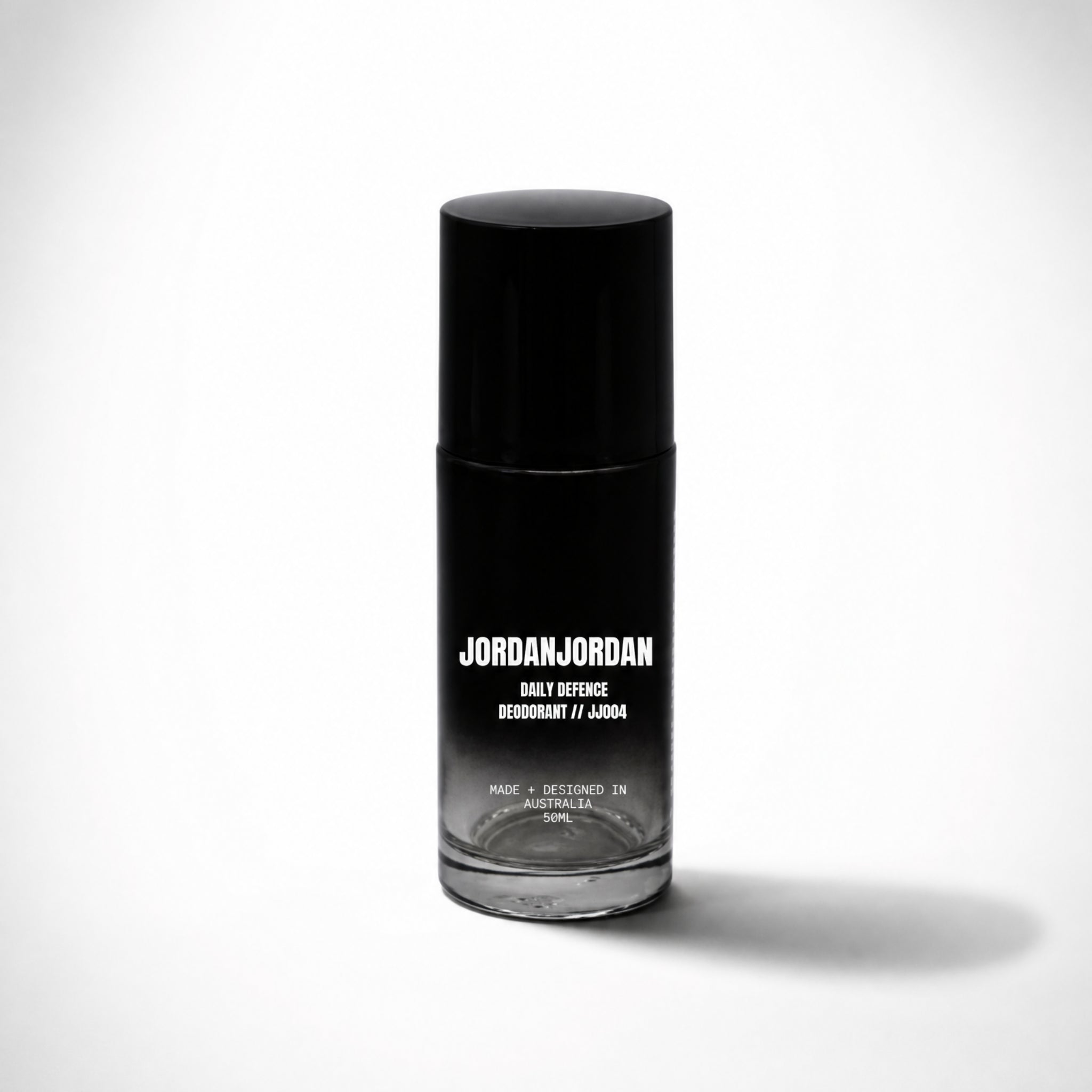
-
"Transparent, effective and effortlessly modern, this is a system that genuinely delivers."
pipDays of Popoyo Eaux De Parfume | 50ml | Sweet
-
"I love that the foundational products are fragrance-free and that scent exists separately. It feels like a smarter way to build a routine without sacrificing personal identity or having it overshadowed by heavy, toxic blends of fragrance from all the products you used that day."
Diana - Founding Community memeberTanami Dune Eaux De Parfume | 50ml | Warm and Smokey


Got Questions? We’ve Got You.
ABOUT THE BRAND
What is JORDANJORDAN?
JORDANJORDAN is a luxury beauty brand built around foundational essentials for hair, skin and scent.
Our products are designed as one cohesive system, combining purposeful actives, disciplined formulation and considered ingredient selection. We remove unnecessary excess while preserving the performance, pleasure and experience expected from luxury beauty.
What are foundational essentials?
Foundational essentials are the products we use most often and rely on every day.
They cleanse, condition, hydrate and support the skin, hair and body without adding unnecessary steps. Because these products form the foundation of a daily routine, we believe they deserve the greatest care and consideration.
What makes JORDANJORDAN different?
Most beauty routines are assembled across multiple brands, often with little consideration for how the products work together.
JORDANJORDAN was created as a complete system. We consider the formulas, active ingredients, preservation systems, packaging and fragrance as connected parts of one approach.
What we leave out matters, but so does what every product delivers.
Why are your products designed as a system?
We believe a considered foundation can reduce the need for excessive product layering.
Our foundational products are designed to complement one another across the hair, skin and body. Fragrance is then kept separate as an optional final layer.
This creates a simpler, more cohesive everyday ritual.
What does Foundation Over Excess mean?
Foundation Over Excess is our belief that more products do not necessarily create better results.
We focus on purposeful, multi-use essentials that perform their intended role well and can help simplify the number of products used each day.
Rather than continually adding more steps, we begin with a strong foundation.
Why does JORDANJORDAN talk about endocrine disruption?
Because customers deserve to know more than what a product promises to achieve.
The endocrine system is the body’s hormone communication network. Certain substances may interact with this system by mimicking, blocking or altering the way hormones are produced or function.
Endocrine disruption is only one part of our wider formulation philosophy. We also consider performance, ingredient purity, product stability, packaging compatibility and the complete product lifecycle.
Our purpose is not to create fear or provide medical advice. It is to explain the standards behind our products so customers can make more informed choices.
Why doesn’t JORDANJORDAN simply call itself “clean beauty”?
Because “clean” does not have one universally applied meaning in cosmetics.
For one brand, clean may mean paraben-free. For another, it may refer to natural ingredients, vegan formulations, cruelty-free practices or a retailer’s own restricted-ingredient list.
The word clean does not automatically explain what has been assessed, what has been excluded or whether botanicals, fragrance materials and endocrine-related concerns were considered.
We prefer clarity over marketing shorthand. Marketing terminology is not the same as a formulation standard. We explain what we screen, what we intentionally exclude and why.
Can a cosmetic claim to be “hormone-disruptor-free”?
There is currently no specific Australian Government certification that verifies an ordinary cosmetic as “hormone-disruptor-free.”
Some brands use this wording, but the statement is only meaningful when the brand clearly explains what it has assessed and can support the claim it is making.
We encourage customers to look beyond the headline and ask:
- What does the brand include within its definition?
- Were botanicals and essential oils considered?
- Was the complete fragrance composition reviewed?
- Does the claim refer to ingredient screening or finished-product testing?
- Is there a published standard behind the statement?
At JORDANJORDAN, we do not rely on a broad claim alone. We publish the framework behind our decisions and distinguish strict exclusions from precautionary choices. You can read more about our approach to endocrine disruption here.
Are JORDANJORDAN products vegan and cruelty-free?
Yes. All JORDANJORDAN products are vegan and formulated without animal-derived ingredients.
We do not test our finished products on animals or commission cosmetic animal testing on our behalf.
These commitments are important to us, but they describe only one part of our wider standard. Vegan and cruelty-free refer to animal-derived ingredients and animal testing; they do not, on their own, explain how a product has been formulated, screened or assessed.
The same applies to words such as clean, natural, low-tox and non-toxic. These terms may be defined differently by each brand or retailer and do not automatically tell customers:
- which ingredients have been assessed or excluded;
- whether botanicals, essential oils and fragrance materials were considered;
- whether endocrine-related concerns formed part of the formulation process;
- whether packaging compatibility and manufacturing purity were reviewed; or
- whether the brand follows a clearly defined and published standard.
At JORDANJORDAN, vegan and cruelty-free are part of our standard—not a substitute for it.
We explain what we screen, what we leave out and why, so customers do not have to rely on broad marketing terminology alone.
About our foundational range
What does “hormone-considered” mean?
Hormone-considered describes the way we approach formulation.
Each formula is reviewed against the JORDANJORDAN Endocrine-Disruptor Screening Standard, with particular consideration given to ingredients associated with estrogenic, androgenic—including testosterone—and thyroid pathways.
We also consider packaging, ingredient purity, stability and how the complete product is used.
Hormone-considered is a formulation philosophy. It is not a medical claim, health advice or an Australian Government certification.
Are your products made without known hormone disruptors?
We do not formulate with ingredients identified as known hormone disruptors within our Category 1 endocrine screen.
We also avoid selected botanicals, essential oils and aromatic materials under our broader Category 2 precautionary standard.
Rather than relying on an undefined “free-from” statement, we explain what our standard covers and make the complete list available through our Formulation Standard and Ingredient Glossary.
What is your Category 1 endocrine screen?
Category 1 is our strict endocrine-related screen.
It includes ingredients identified within our standard as established (known) endocrine disruptors, substances frequently associated with potential endocrine activity in cosmetics and substances that have been subject to formal regulatory review.
We do not formulate with the Category 1 substances listed within our standard.
These include selected:
- phthalates;
- polycyclic synthetic musks;
- undisclosed fragrance compositions;
- parabens;
- ultraviolet filters associated with endocrine-related concern;
- BHT and BHA;
- triclosan and triclocarban;
- benzyl salicylate in leave-on fragrance products;
- resorcinol;
- kojic acid when proposed as a skin active;
- D4, or cyclotetrasiloxane;
- D5, or cyclopentasiloxane; and
- other substances identified within our published screening standard.
The ingredients within this category do not all carry the same scientific or regulatory classification. Their inclusion reflects the deliberately conservative nature of our approach.
What is your Category 2 precautionary standard?
Category 2 extends beyond the strict endocrine screen.
It includes selected botanicals, essential oils and aromatic materials where available information gives us a reasonable basis for caution.
It also considers ingredients that may be excluded or carefully controlled for other reasons, including irritation, manufacturing purity, environmental considerations, sustainability or our wider formulation philosophy.
Not every Category 2 ingredient is a hormone disruptor. We believe it is important to make that distinction clearly.
Why do you exclude selected botanicals?
Because natural ingredients can still be biologically active.
Some plants naturally contain compounds that may interact with estrogen or other hormone-related pathways. These are sometimes described as phytoestrogenic compounds.
The evidence is not the same for every botanical, and laboratory activity does not automatically mean that normal cosmetic use will cause endocrine disruption in people.
However, where the available information gives us a reasonable basis for caution, we hoose not to use that ingredient.
Our precautionary standard includes selected botanicals such as:
- soy and soy isoflavones;
- red clover;
- licorice root;
- hops;
- alfalfa;
- maca;
- saw palmetto;
- ginseng;
- kudzu;
- flaxseed;
- fennel;
- anise;
- fenugreek;
- dong quai;
- lavender;
- tea tree;
- rosemary;
- sage;
- clary sage;
- geranium;
- tonka bean; and
- patchouli.
These materials are not all excluded for the same reason, and not all are formally classified as endocrine disruptors. Their exclusion reflects our deliberately cautious approach to products designed for frequent, everyday use, often more than once a day.
Does natural mean safer?
Not automatically.
Natural extracts and essential oils can contain many biologically active compounds. Their natural origin does not, on its own, determine whether they are suitable, stable or hormonally inactive.
Likewise, a well-understood synthetic ingredient is not inherently harmful simply because it was created in a laboratory.
Water-based products also require an effective preservation system to keep the formula safe and stable throughout its intended use.
We assess each ingredient according to its purpose, concentration, purity, stability, available evidence and role within the finished formula, not simply whether it is described as natural or synthetic.
Why are your foundational products fragrance-free?
Fragrance is often layered through cleansers, moisturisers, hair products, deodorants and other products used throughout the day. Fragrance is also a legal umbrella term that brands can use to hide undisclosed ingredients.
We chose a different approach.
Our foundational skin, hair and body products remain fragrance-free by design, creating a neutral base centred on performance, ingredient integrity and repeated everyday use.
Fragrance is kept separate so customers can choose whether, when and how they wish to wear it.
Does your ingredient standard compromise performance?
No.
Removing ingredients is only one part of responsible formulation. A product must also perform beautifully.
We use purposeful cosmetic actives and carefully selected supporting ingredients to cleanse, hydrate, condition and support the appearance and feel of the skin and hair.
Where possible, our products are designed to perform more than one everyday role, helping to reduce unnecessary layering and simplify the routine.
We do not believe customers should have to choose between thoughtful formulation and effective results.
What ingredients do you leave out?
Our formulations are made without intentionally added substances identified within our Category 1 endocrine screen.
We also avoid the selected botanicals, essential oils and aromatic materials included within our Category 2 precautionary standard.
Beyond endocrine-related considerations, we assess ingredients for their purpose, purity, stability, compatibility, irritation potential and broader environmental impact.
Not every ingredient we exclude is a hormone disruptor.
The complete list and the reasons behind our decisions are available within our Formulation Standard and Ingredient Glossary.
Why do you place so much emphasis on packaging?
Because the formula and its packaging remain in contact throughout the life of the product.
We select packaging materials with product stability, compatibility, durability and protection in mind. Where applicable, we also request documentation relating to material composition, migration, heavy metals, phthalates and relevant compliance standards.
We consider the formula and its packaging as one complete system as well as how you, use, transport and store the products.
What packaging materials do you use?
We primarily use glass, aluminium and PETG, selected according to the needs of each individual product.
These materials are considered for their stability, durability, compatibility and recycling potential.
Recycling options may vary depending on the facilities available in each customer’s local area.
Do you consider what happens after a product is used?
Yes.
We consider the product from formulation and packaging through to use and eventual disposal.
Rinse-off ingredients may enter wastewater systems, while residual product and packaging may eventually reach landfill, soil or waterways.
This does not mean that any cosmetic product can be described as having no environmental impact. It means we aim to make considered decisions across the complete product lifecycle rather than assessing the formula in isolation.
How do you assess your formulations?
Our assessment begins long before a product reaches its final stage.
We consider:
- our published screening standard;
- current scientific and regulatory information;
- the purpose and concentration of each ingredient;
- supplier specifications and declarations;
- manufacturing purity;
- formulation stability;
- ingredient compatibility; and
- packaging compatibility.
This process helps us decide what to include, what to avoid and where to take a more precautionary approach.
Our standard will continue to evolve as scientific knowledge, regulatory guidance and assessment methods develop.
Who manufactures your products?
Our products are made by carefully by a selected specialist cosmetic, fragrance and packaging partners.
Each partner is chosen according to the needs of the product and is required to work within our formulation, quality, documentation and manufacturing standards.
All our foundational range and scent is designed and made in Melbourne Australia.
Where can I learn more about your ingredients?
The full ingredient list for each product is available on its individual product page.
Our broader ingredient principles, screening categories and exclusions are explained within our Formulation Standard and Ingredient Glossary.
ABOUT OUR SCENT RANGE
Why did you separate fragrance from the foundational range?
We wanted to create a neutral foundation that allows customers to choose if, when and how they wear fragrance.
Rather than including scent across products used repeatedly on the face, hair and body, fragrance is applied separately as an intentional final layer.
This allows customers to personalise their ritual while preserving the fragrance-free foundation beneath it.
What makes the JORDANJORDAN fragrance standard different?
We do not rely on words such as clean, natural, low-tox, non-toxic, vegan or cruelty-free as substitutes for a clearly defined fragrance standard.
These terms do not all mean the same thing.
Vegan and cruelty-free primarily describe ethical criteria. Natural describes ingredient origin. Clean, low-tox and non-toxic may be defined differently by each brand or retailer.
None of these descriptions automatically tells a customer whether botanicals, essential oils and fragrance materials were considered through an endocrine-related lens.
Our point of difference is the standard behind the fragrance.
Are JORDANJORDAN fragrances natural?
We do not market our fragrances as all natural.
Natural aromatic materials can contain many biologically active compounds, including naturally occurring phytoestrogenic compounds. Carefully selected synthetic materials can also offer precision, consistency and stability.
Neither natural nor synthetic origin determines safety on its own.
Our fragrances use a deliberate balance of selected natural-origin and synthetic aromatic materials. Each is considered according to its purpose, purity, stability, available evidence and role within the finished fragrance.
Can a clean or natural fragrance still contain ingredients JORDANJORDAN avoids?
Yes.
Because clean does not have one consistently applied definition, a fragrance marketed as clean may still contain materials that fall outside the JORDANJORDAN standard.
A natural fragrance may also contain essential oils, extracts or aromatic materials with naturally occurring phytoestrogenic compounds or other endocrine-related activity.
This does not mean that the finished fragrance will cause endocrine disruption in people. It demonstrates why the words clean and natural do not, on their own, explain how a fragrance has been assessed.
A marketing label is only as meaningful as the standard behind it.
Should I rely on a “hormone-disruptor-free” fragrance claim?
Many Brands use this claim. We encourage customers to look beyond the headline and consider what supports that claim.
Useful questions include:
- Does the brand define what it has screened?
- Were botanicals and essential oils considered?
- Was the full fragrance composition reviewed?
- Does the statement refer to ingredient screening or finished-product testing?
- Is the supporting standard available to customers?
Removing a small group of widely discussed synthetic materials does not necessarily mean every other ingredient has been assessed through the same lens.
JORDANJORDAN explains what our standard covers, what we intentionally exclude and where our decisions are precautionary.
What do you intentionally exclude from your fragrances?
- Fragrance compositions that are not sufficiently disclosed to JORDANJORDAN for assessment;
- phthalates, including DEP, DBP and DEHP;
- polycyclic synthetic musks, including Galaxolide and Tonalide;
- benzyl salicylate
- BHT and BHA;
- Parabens;
- D4, or cyclotetrasiloxane;
- D5, or cyclopentasiloxane; and
- other Category 1 substances where relevant to the fragrance composition.
Our broader precautionary exclusions also apply to fragrance, including selected botanicals and aromatic materials such as lavender, tea tree, rosemary, sage, clary sage, geranium, fennel, anise, tonka bean and patchouli.
These substances are not all excluded for the same reason and do not all carry the same scientific or regulatory classification.
The complete list is available within our Formulation Standard and Ingredient Glossary.
Do you know what is inside your fragrance compositions?
Yes and we want our customers to understand that too.
Every JORDANJORDAN fragrance begins with an original creative brief developed by us. We work directly with our perfumer to build, refine and produce each scent specifically for JORDANJORDAN.
Our fragrances are not selected from a catalogue, relabelled from an existing formula or drop-shipped to customers by an unrelated fragrance company. We know who develops them, where they are made and the materials used to create them.
We require detailed compositional information from our fragrance partners so that every material can be reviewed against the JORDANJORDAN screening standard before a fragrance is approved.
We do not use words such as “clean” "low tox" or "non Tox" or “natural” as substitutes for explaining how a fragrance was created. Clean can mean something different from one brand to another, while natural origin does not automatically mean that an ingredient is safer, more suitable or hormonally inactive.
All JORDANJORDAN products are vegan, formulated without animal-derived ingredients and cruelty-free. These are important ethical commitments, but they do not tell customers what is inside a formula or whether its ingredients have been assessed against an endocrine-related screening standard.
General cosmetic and fragrance compliance is essential, but our process goes further. We assess our fragrance materials against our Category 1 endocrine screen and our Category 2 precautionary standard, including selected botanicals, essential oils and aromatic materials we have chosen not to use.
We will clearly disclose the ingredients required on each product, explain the standard behind our fragrances and identify what we intentionally leave out so customers are not expected to rely on marketing terminology alone.
Does your fragrance standard make the scents less sophisticated?
No.
Fine fragrance should still be expressive, complex, lasting and emotionally engaging.
Our perfumers work within a more exacting brief, balancing selected natural-origin and synthetic aromatic materials to create the desired scent, diffusion, texture and performance.
Our intention is not to remove the artistry from fragrance. It is to show that fine fragrance can be created with greater scrutiny, clearer boundaries and more meaningful transparency.
-
Reset + Recover Facial mask | 75ml
Regular price $79.95 AUDRegular priceUnit price per -
Body Hydrator | 450ml | Fragrance Free
Regular price $0.00 AUDRegular priceUnit price per -
 Sold out
Facial Mask Application Brush
Regular price $0.00 AUDRegular priceUnit price per -
Facial Cleansing + Lymphatic drainage brush
Regular price $0.00 AUDRegular priceUnit price per -
 Sold out
Signature Clear Cosmetic Travel Case
Regular price $0.00 AUDRegular priceUnit price per -
The cool bag | Signature Cosmetic Cooler bag
Regular price $0.00 AUDRegular priceUnit price per -
Daily Defence Deodorant | 50ml | Fragrance Free
Regular price $0.00 AUDRegular priceUnit price per -
Mineral Balance facial mist | 100ml | Fragrance Free
Regular price $0.00 AUDRegular priceUnit price per -
Daily Foundation Facial Moisturiser | 150ml | Fragrance Free
Regular price $0.00 AUDRegular priceUnit price per -
Daily Foundation Facial Cleanser | 150ml | Fragrance Free
Regular price $0.00 AUDRegular priceUnit price per


